

Commercial Vehicles Explained: Types, Applications, and the Importance of Suspension Components
Commercial vehicles form the backbone of global transportation, logistics, construction, and public mobility. From urban delivery vans to heavy-duty trucks and specialized trailers, each vehicle type is designed to serve a specific operational purpose—often under demanding load and road conditions.
Understanding commercial vehicle categories and the engineering behind them is essential for fleet operators, manufacturers, and automotive component suppliers alike.
Main Types of Commercial Vehicles
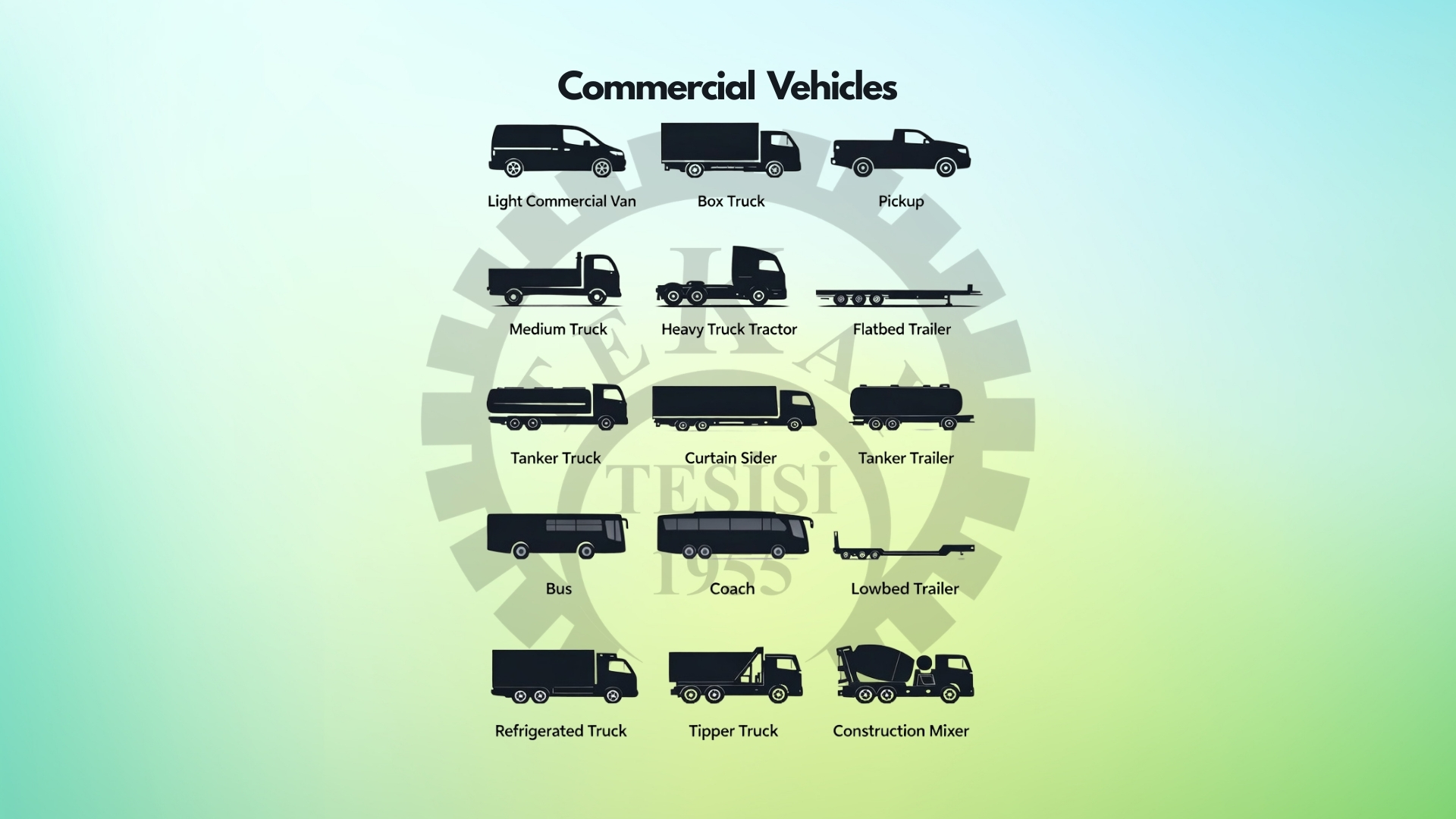
Light Commercial Vehicles (LCVs)
Includes vans and pickup trucks used for last-mile delivery, service operations, and small cargo transport. These vehicles prioritize maneuverability, efficiency, and moderate load capacity.
Medium Trucks
Used for regional distribution, construction support, and municipal services. They balance payload capability with operational flexibility.
Heavy Trucks & Truck Tractors
Designed for long-haul transport and extreme loads. These vehicles experience continuous mechanical stress, making durability-critical components essential.
Trailers (Flatbed, Lowbed, Curtain Sider, Tanker)
Trailers expand transport capability across industries such as construction, agriculture, fuel logistics, and manufacturing.
Specialized Vehicles
Refrigerated trucks, tipper trucks, mixers, buses, and coaches serve niche but vital roles, often requiring customized suspension and fastening solutions.
Why Suspension Systems Matter in Commercial Vehicles
Suspension systems absorb road impact, distribute load evenly, and maintain vehicle stability. In commercial applications, suspension performance directly affects:
-
Safety under load
-
Tire wear and maintenance costs
-
Driver comfort and vehicle control
-
Structural longevity of axles and chassis
A failure in suspension-related components can result in downtime, safety risks, and costly repairs.
The Role of U-Bolts and Fastening Components
U-bolts are fundamental load-bearing elements in leaf-spring suspension systems. Their role includes:
-
Securing axles to leaf springs
-
Maintaining alignment under vibration and load
-
Transferring forces safely to the chassis
In heavy-duty commercial vehicles, U-bolts must be:
-
Manufactured from high-strength materials
-
Precisely formed and heat-treated
-
Resistant to fatigue, corrosion, and deformation
Quality at this level directly impacts vehicle reliability.
Engineering from the Ground Up
Commercial vehicle performance is not defined solely by engine power or payload ratings. It is built through engineering precision at the component level—from suspension geometry to fastening integrity.
For manufacturers and suppliers, focusing on durability, material selection, and process control ensures long-term value across the vehicle lifecycle.
Conclusion
Whether for logistics, construction, agriculture, or public transport, commercial vehicles rely on robust suspension systems and critical components like U-bolts to operate safely and efficiently.
Understanding vehicle types and the engineering behind them enables smarter decisions, improved safety, and sustainable performance in demanding environments.